Monday, December 15, 2014

December 15

Today in class, we went over what was going to be on the exam.

Socrates quote- "the examined life is not worth living", rather face death than life- agora to speak up, clay pots did the best,
arete- doing something good, excellence
idiot- politics, didn't care
polis- city state
Merkel- more powerful than Dilma Rouseff 
agora- ancient greek meeting place
elbert hubbard- writer of message to garcia
socrates asked people questions to encourage critical thinking
-accused of direspecting greek gods
-corrupting minds of young
number one english speaking country- china
total fertility rate- number of birth's from women per country
2.1 population stays the same
1.something population is decreasing
our population is increasing
chanceller of germany- angela merkel


Friday, December 12, 2014

December 12

Today in class, we got back two tests and reviewed them for the exam. We read the answers in class, and I corrected my paper. I knew some of my mistakes and made sure I went over them for the exam. Our first exam is Tuesday and we have Human Geo. I hope to get a good grade on the exam and will study very hard. This should be a very hard week, but at least we get out early!

Wednesday, December 10, 2014

December 10

Today in class, we took our cultural test. The first questions included questions from Slumdog Millionaire, and I tried to remember them. I remembered that Benjamin Franklin is on the $100 bill. The hardest part was the abbreviations meaning different things, and I think I got most of those wrong. The last part of the test was to choose a religion to go with a statement. Some were hard to remember, and I was hoping I did well on that section. After I finished the test, Mr. Schick went to go check the papers. He called us up and we all got to know our grade. I know I didn't do well, and was scared to see my grade. I got a 73%, but at least I passed instead of failing. Hopefully I will do well on the exam next week!

Tuesday, December 9, 2014

December 9

Today in class, we had Mr. Kimble as a sub. I studied my notes with Leigh and Meredith, and we also started our 2014 rap. We didn't get far on the rap, but still found a song for it to go to. We all shared our notes about cultural characteristics, and hoped to get a good grade. I got mixed up with all the religions, and knew I needed to study hard for this test. I hope our class does well on the test and maybe try to bring our average up!

Monday, December 8, 2014

December 8

Today we took more notes on different religions:

more on Buddhism
Four Noble Truths
-there is suffering
-attachment to desire is the origin of suffering 
-there is a cessation of suffering
-the Eight fold Path will lead to the cessation of suffering

The Eight fold Path
Right View
Right Intention
Right Speech
Right Action
Right Livelihood
Right Effort
Right Mindfulness
Right Dedication

Judaism
-14-18 million
-called Jews
-located in Israel
-founder: Abraham(?)
holy book: Talmud ad Torah (the first five books of the Old Testament: Genesis, Exodus, Leviticus, Numbers, Deuteronomy)
beliefs: ethical monotheism- God is one, and concerned with the actions of humankind
Ten Commandments
13 Principles of Faith


Friday, December 5, 2014

December 5

Today in class we took more notes from the slide show, and learned facts about religion. Here are the notes I took:

Examples of Spatial Divisions
Political alliances
-North Atlantic Treaty Organization (NATO)
-Commonwealth of Nations
-Organization of American States (OAS)

Christianity
-around 2.2 billion (largest in the world)
-called Christians
-located in Europe, the Americas, Southern Africa
-one denomination 
-Catholic Church (biggest), Eastern Orthodox, Protestant, and more
-founder is Jesus Christ
-holy book is the bible, new testament 
-belief: Jesus is birth human and divine- the son of god
-crucified, died, wand was buried
-ascended into heaven where he reigns with God the Father
-clergy: Pope is head of the church, priests are local authorities

Islam
-1.5 billion (second largest)
-called Muslims
-located in Indonesia, Middle East, and North Africa
-denominations: Sunnis (75- 90%), Shiites (10-20%)
-founder Muhammad (570-632)
-holy book is Qur'an
-belief: monotheistic, Abrahamic
-five pillars (testimony, prayer, alms-giving, fasting, pilgrimage)
-Muslims see their purpose in life as serving and submitting to Allah (God), and observing Islamic law

Hinduism
-1.1 billion (third largest)
-called Hindus
-located in India, Nepal
-holy books the Vedas- eternal truths revealed to ancient sages; not written on paper but comprised
(meant to be sung and easily memorized)
-no distinct founder- series of intellectual or philosophical points of view, rather than a rigid, strict set of beliefs- probable the oldest religion, although Hinduism is less a religion than a way of life, or a faith
-in other words... reincarnation

Buddhism
-500 million to 1.5 billion 
-called Buddhists
-located location Southeast Asia, China, Nepal, Japan (there are 1.2 million Buddhists in the United States)
-founder is Siddhartha Gautama
-denominations; Tibetan, Zen, Theravada, Amidist


Wednesday, December 3, 2014

December 3

Today, we took more notes:
Religion can be both a unifying force
-there are five major religions in the world today: Hinguism, Buddhism, Judaism, Christianity, and Islam
-they have millions of followers all believing the same thing
-religion can also be a dividing force around the world
-Hindus and Muslims fight in India (Hindu) and Pakistan (Muslim)
-There are conflicts between Catholics and Protestants (two forms of Christianity) in Northern Ireland
-Jews, Christians and Muslims all claim Jerusalem as their religions holy site, they are constantly fighting over the land
-spatial divisions are how we divide the livable space found on the earth by establishing social, economic, and political control
-you can be a member of more than one spatial group
-spatial divisions can also cause conflicts or cooperation
Examples of Spatial Divisions:
-countries
-economic alliances
  -European Union (EU)
  -Organization of Petroleum Exporting Countries (OPEC)

Tuesday, December 2, 2014

Day 43

Today in class, we took notes about cultural characteristics. Here are the notes I took:

Cultural characteristics are parts of a group's everyday life. They are the ideas and themes which the group will teach to all members. These same characteristics can also link or divide a region.
Examples: language, religion, and ethnic heritage
language
-Arabic unites the Arab world
-Spanish unites the Hispanic world
-Brazil only South American nation that does not speak Spanish, speaks Portuguese
-Canada is a bilingual nation, french and English are their official languages
-Switzerland has multiple languages but very little conflict between the groups
-English is now considered the world language and is used for most business transactions around the world
Ethnic
-in Yugoslavia, many ethnic groups were made into one country (Serbs, Croats, Bosnians, Albanians)
-when strong leadership died out, the different groups fought a very bloody civil war and now they all have separate countries
-in the countries of Rwanda and Burundi in Africa, two ethnic groups are dominant, the Tutsis and the Hutus
-the hutus are dominant in one and they persecute the Tutsis, and the Tutsis are dominant in the other and they persecute the Hutus. it lead to almost constant war
-the united states and Switzerland have peacefully merged multiple ethnic groups in their countries
-Korea, Japan, and China have primarily one ethnic group
-on the island of Cyprus, the Greeks and the Turks try to gain control

Friday, November 21, 2014

Day 42

Today in class, we started to watch a movie called Slumdog Millionare. This movie is about a guy name Jamal, who won "Who Wants to Be a Millionare." It shows flashbacks to when he was younger and he lives in a small poor village. The police is this movie are not helpful at all.

Tuesday, November 18, 2014

Day 41

Original:
Россия — священная наша держава, Россия — любимая наша страна. Могучая воля, великая слава — Твоё достоянье на все времена! 

Припев: Славься, Отечество наше свободное, Братских народов союз вековой, Предками данная мудрость народная! Славься, страна! Мы гордимся тобой!

От южных морей до полярного края Раскинулись наши леса и поля. Одна ты на свете! Одна ты такая — Хранимая Богом родная земля!

Припев

Широкий простор для мечты и для жизни Грядущие нам открывают года. Нам силу даёт наша верность Отчизне. Так было, так есть и так будет всегда! 

Припев


English Translation:
O Russia, for ever your strong sacred country !
O Russia, for ever the land that we love !
The fame that is great and the will that is mighty
So be they thy treasure in ages to come.
Praised be the Fatherland, cherishing home of ours
Centries-old union of peoples in free,
Popular wisdom given us by ancestors.
Praised be our country! And were proud of thee!
From seas in the South and up to polar border
Our woods and our meadows have stretched far away.
Alone in the whole world, you stand one and only!
By God saved as ever our dear native land.
Praised be the Fatherland, cherishing home of ours
Centries-old union of peoples in free,
Popular wisdom given us by ancestors.
Praised be our country! And were proud of thee!
For generous dreaming, for life and for longing
The years approaching give us ample scope.
With faith in our Homeland we are getting stronger.
It was so, it is so and it will be so!
Praised be the Fatherland, cherishing home of ours
Centries-old union of peoples in free,
Popular wisdom given us by ancestors.
Praised be our country! And were proud of thee!


This song sounds a lot different from our national anthem. The tone is military, and it seems to be sung in military purposes and is a proud country song. Our national anthem is more about our flag and our country fighting for victory. Overall, I think the lyrics are well written and show that they care and are proud of their country.


Monday, November 17, 2014

Day 40

Today in class, Mr. Schick talked about the BAHS academic tournament. JC participated and won first place out of 24 schools. He talked about how the tournaments work and how you answer. He read us some questions from online, that relate to the questions they have to answer. Some of the people in our class could answer most of them, and it was fun to do. After we finished answering questions, we got to see what we got on our country test. I was really nervous to see what I got, because I thought the test was challenging. When I saw my test score, I think I could have done better. Hopefully the test won't bring my grade down a lot, and still end the quarter with a good grade. We also talked about generic names for soft drinks. We learned that around the United States, people call soft drinks different names. For example, pop, soda, coke, and others. In Maryland, we mostly say soda and we are taught that way from our parents. These cultural characteristics can link or divide a region. Examples of cultural characteristics would be language, religion, and ethnic heritage.

Friday, November 14, 2014

Day 39

Today in class, we took the country test. I studied for the test, but I feel like it was challenging and a hard test. We had to match the different presidents, with the country. There were a lot of multiple choice questions, and I think that was the hardest part of the test. The last part it showed a picture of two presidents and you have to tell you who they are. The essay question is a question we discussed in class. It was about how we shouldn't assassinate our president. Assassinating the president, is considered murder. It is disrespectful, and you should respect your country. You can wait till the next election, and re-elect a new president, not assassinate them. We have had 4 presidents, that have been assassinated, and we don't need any more.

Wednesday, November 12, 2014

Day 38

Today in class, Megan and I finshed presenting our project. Brazil and Mexico also presented. I learned a lot like the following:
Brazil
Federal republic
4 year terms
Re-elected two times
President- dilma rousseff
First female president of brazil
Re elected oct 27, 2014
Last term for now, but can come back four years after her second term
Arrested for participating political guerilla
Military dictatorship- rules

Mexico
Member of the institutional revolutional
Enrique Pena Nieto

Drugs killed 1,000 people

Tuesday, November 11, 2014

Day 37

Today in class, we had a sub, Mr. Huber. All of the countries haven't presented yet, but we were to study for the test. We looked on Mr. Schick's blog and found a review power point to review to the test.  I studied with Leigh and Meredith, until we tried to open the power point links. It told us we needed permission to see the slides. We were worried, because we couldn't figure out how to open the different projects. Mr Schick found out, and moved the test to Friday, and I was relieved.

Monday, November 10, 2014

Day 36

Today in class, we finished our country presentations, which were the Syria, Germany, UK, and Russia. The class ended and I was not able to finish. I learned a lot about the other countries like:
Syria
Republic under an authoritarian regime
Syrians harshly suppress the opposition
Bashar al-assad
Son of aniseh and hafez al assad
Dad was poor but became prime minister
Republic since 1941
Last election in june 2014
Most came from assad threatening people to vote for him or else he will bomb you or your house
7 year terms
Until 2021

Germany
Federal republic
Been in place since october 3, 1990
After world war ii east and west were separated by berlin wall
Knocked down 11/9/14
President- joachim gauck since march 23,2012
Independent political party
Chancellor- angela merkel
Since nov 22, 2000
Former research scientist
Impeachment- the president can be both replaced by the bundestag
620 member called "bundestag"
"most powerful woman in the world"

UK
Constitutional monarchy
When king or queen acts as head of state
Commonwealth realm- a sovereign state that’s a member of the commonwealth
Executive, judicial, legislative
Has been around since 1066
Commonwealth of nations currently 54 members with one suspended and dates back to the mid 20th century
Prime minister- no term limits
Elections take place every 4 years sometimes 5
Prime minister- david cameron
No term limits
Became prime minister on june 2, 2010
Leader of opposition 2005-2010
Leader of the conservative party
Youngest prime minister since 1812
Prime minister oversees the operation of the civil service and government agencies
House of commons and house of lords
Don’t have a problem with david cameron
Descendant of king william iv
Change in leadership
Nothing that would make people want to throw him out of office

United States
President- barack obama
Federal republic with strong democratic tradition
Obaa will be allowed to be in power two more years
He won 2008 and 2012 election
A president can now only serve 2 terms of four years
First half african american president
5 years in presidency
Change in leadership re-elect a president
Assassinate
Impeachment

There could become more problems in the government or the problems could be fixed

Friday, November 7, 2014

Day 35

Today in class we did three country projects. I learned a lot about China, Canada, and Japan.
China
Communist state
Communist- government controls everything in economy, sometimes authoritarian party holds power
President- xi jinping
Been in office for 2 years
In china a president serves 10 years

To get rid of or overthrow a president
-re-elect
-impeachment
-assassination
Xi jinping got a total of 2,937 votes- four delegates voted against him, four abstained, and 38 didn’t vote
China likes xi jinping as a leader

Canada
Parliamentary democracy- democratic form of government which the greatest representation in the parliament
Since 1867
A federation
A constitutional anarchy
Conservative party of Canada- Stephen harper
5 parties
Prime minister- stephen harper
22nd prime minister
No term limits
Since 2006
Election every 4 years
Next election is oct 19 2015

Japan
Parliamentary system is a system of democratic governance of a state in which the executive obtains its democracy legitimacy from, and is held accountable
Prime minister- shinzo abe
Does not elect directly
Emperor akihito

Finished term in 2007

Wednesday, November 5, 2014

Day 34

Today in class, we started presenting our country projects and took notes. I learned a lot about France, like:
France
France has a republic government and a semi-presidential system
President and a prime minister
The republican form of government in France was made in 1958
President- Francois Hollande and prime minister- Manuel Valls
Executive, legislative and judicial branches

Hollande
Part of Socialist Party
-Going to run again in 2017
-ran in 2012 and won
-Shares executive power with the prime minister
-can be president until 2022

Manuel Valls elected April 1, 2014

Republic government- state in which the supreme power rests in the body of citizens entitled to vote and is exercised by representatives chosen directly or indirectly by them

Republic means "public thing" in Latin

Tuesday, November 4, 2014

Day 33

Today in class, we decided to go see the cancer tables near the cafeteria. We learned a lot about different cancers and how they can effect others. A table showed that if you have a lot of sun damage, you may have a change of having skin cancer. They had a mirror and a purple light, to show if you have dryness, oiliness, sun damage, and more. I put my head in and there wasn't much on my face, so I was kind of confused. She said my face was healthy, and I was very glad. Another table showed us the difference in lungs, compared to a non smoker. They told us what was in cigarettes and how it effects your lungs/body. We saw teeth of smokers and people who chewed tobacco. This should prevent others from smoking. Our class learned a lot and I am glad we went.

Wednesday, October 29, 2014

Day 32

Today in class, we worked on our country project and found a lot of information about Russia. I added a slide about how Vladimir had a KGB career. KGB is the primary intelligence organization in the Soviet Union from 1954-1991. The KGB was a committee for State Security, and Vladimir joined in 1975. We added more slides about his career and some extra facts about himself. Today was a successful day.

Tuesday, October 28, 2014

Day 31

Today in class, we worked more on our country projects. I added a few more slides about how the Russians feel about Putin. We researched the whole mod, and were having trouble finding some of the information. We read more facts about Vladimir and the election. We learned that he cannot get elected again, and has been president since 2012. He previously served as president in 2000-2008. We were very shocked to see that he has been president twice. He seems to be a strong and tough leader for Russia.

Monday, October 27, 2014

Day 30

Today in class, we talked about the countries and Mr. Schick assigned us a new project. We are supposed to create a power point about the country we decide. He called on different people to pick their partner, and choose their country. We put the names with the country on the board. Megan picked me to be her partner, and we picked the country, Russia. On the Human Geo blog, it told us what our power points should be about. I did a blog about the federal government of Russia and what it means. I added another slide with some facts about Vladimir Putin. I think this project is difficult, but it will be worth it in the end.

Saturday, October 25, 2014

Day 29

Today in class, we had a pop quiz. I was very surprised and really nervous, about the quiz. When I got the quiz, I knew I wasn't going to get a good grade. If I studied for this quiz, I would've gotten a better grade. I got an 80%, and was happy with my grade. The questions were about the leaders of the different countries we learned about. Hopefully, on the next pop quiz I get a better grade!

Wednesday, October 22, 2014

Day 28

Today in class, we talked about more interesting facts about the different leaders. Everyone took the class period to look up more facts and share them. We learned that Enrique Pena Nieto is the second most power and wealthiest man in Mexico. We know that the first is probably a drug lord. When the presidents and citizens try to catch and arrest the drug lord, they would be assassinated. This is a big problem in Mexico. Mexico has had a larger income, from selling some much heroin. We ended class questioning if Mexico will ever change this, for their country.

Tuesday, October 21, 2014

Day 27

Today in class, we talked more about the presidents/leaders of the countries we looked at. We found some interesting facts about some of the leaders. For example, Enrique Pena Nieto, the president of Mexico, cheated on his wife. Some say he only got voted for president, because of his good looks. President of Germany, Joachim Gauck, had parents that were in the Nazi. Vladimir Putin, president of Russia, has a black belt in Judo, and comes across as a tough president. This makes no country want to come after Russia. Dilma Rousseff, president of Brazil, went to jail for political crimes in 1972, and is a cancer survivor. We added some facts to our blogs, and left for the powder puff game.

Sunday, October 19, 2014

Countries

Mexico
Federal republic
President- Enrique Pena Nieto

-first wife died
-cheated on second wife
-some say he was voted for looks


China
Federal Republic
President-  Xi Jinping

-son of founding fathers of communist members of China


India
Democratic republic
President-  Pranab Mukherjee


Russia
Federal republic
President- Vladimir Putin

-earned a black belt in Judo
-manly image to people
Germany
Federal republic
President- Joachim Gauck

-both parents were in nazi
Angelina Murkel- chanceler; was a chemist before
United Kingdom
self-government
Prime Minister- David William Donald Cameron
France
semi-presidential government
President- Francois Hollande
Brazil
Federal republic
President- Dilma Rousseff

-in jail for political crimes 1972
-cancer survivor

Syria
Republic under an authoritarian reign
President- Bashar al-Assad

Canada
Federal republic
Prime Minister- Stephen Harper

-enrolled in university of toronto, then dropped out

Japan
Democratic republic
Prime Minister- Naikaku-sōri-daijin

Israel 
parliamentary democracy
Former President- Shimon Perez


Tuesday, October 14, 2014

Day 25

Today in class, we didn't do much. I was hoping we would get our test back, but three people in our class didn't take it yet. We had to be quiet for the test takers, while they were taking the test. They had 10 minutes to do the front of the test. Everyone would ring the bell in the front of the class, to tell the test takers how much time they had left. When they were done the front, they moved onto the vocabulary and population pyramids. Some of the test takers didn't do the bonus questions, and had to go back and answer them. During this time, I got done some of my homework. We do not have class tomorrow because of the PSAT testing. I am a little nervous, but I am glad it is just a practice.

Friday, October 10, 2014

Day 24

Today in class, we took a test about population. On the front of the first page, we had to go to the CIA world fact book and find the answers to questions. We had 10 minutes to complete the front, and I thought that was a short amount of time. The second part of the test, was complete the sentence with vocabulary. We had a word bank and I knew what the vocab words meant, from studying them. The third part of the test had bonus questions, which I guessed and did not know. The final part of the test had to do with population pyramids. Mr. Schick gave us different population pyramids, and we answered questions about each one. Overall, I thought this test was challenging.

Wednesday, October 8, 2014

Day 23

Today in class, we reviewed for the test on Friday. We talked about population and these terms and facts:

life expectancy- the average period that a person may expect to live
crude birth rate- amount of births per 1,000
crude death rate- amount of deaths per 1,000
rate of natural increase- crude birth rate minus the crude death rate of a population
net migration rate- difference of immigrants of an area in a period of time, divided per 1,000 in inhabitants emigration minus immigration
immigration- the action to leave one country to another
emigration- act of leaving one's country or region with the intent to settle permanently in another
developing nations- lower living standard
developed nations- countries with high gross domestic product
Infrastructure- what a country needs to be connected to the rest of the world to buy things, trade, and more.
total fertility rate- average number of children that would be born to a woman over her lifetime
push force- something causes you to leave the country
-war
-bad health care
-political or religious
pull force- something that causes more people to come to that country

Places where people are dying rather than being born
-Japan
-Africa
-Germany
 Population growth in Japan- negative


Tuesday, October 7, 2014

Day 22

I was not in class today, because I had a field hockey game against Glenelg. We won 2-0!!

Monday, October 6, 2014

Day 21

In class today, we learned more about the CIA world fact book and how to get around the website. We talked about the video we watched of how America is not the greatest country in the world. Some students agreed with this statement and disagreed. We also talked a lot about transportation in different countries. We talked about the United States and how we have 13,513 airports. This gives us an advantage to travel places around the world. Places like Chad, they only have 59 airports, and this gives them a lower advantage to go places. We talked a little about Egypt, and how we are lucky to be living in the United States, rather than somewhere not nice.

Saturday, October 4, 2014

Day 20

In class, we watched a video called newsroom first scene and discussed it. This video showed us that American is not perfect. My thoughts are, that American is not the greatest country and needs improvement in certain places. These placed are things like the economy and world hunger and poverty. Mr. Schick told us a story at the end of class about a time when he met a homeless man and asked him to get food with him and talked to him about his life. Mr. Schick tried to give him advice but the homeless man to go and talk to his sister but he was to embarrassed for her to see her like this.  The very last thing we did in class was when students in our class shared their homeless people stories and told that some are actually lazy and do not want to be successful because people will offer them money and they will just go spend it on drugs and alcohol. Another thing that people would do is offer them a job and they would decline and just say that they would rather sit out on the street. I think this is sad and do not understand why homeless people would not want to get back on their feet someday and be successful in life.

Wednesday, October 1, 2014

Day Nineteen

Today in class, we talked more about the population pyramids in different countries. We talked a lot about China and their population/government. The government in China only let the Chinese women have one baby, because of how bad the government was with food, education, etc. This all started in the late 40s and the early 50s, and still continues today. We also talked about Cuba's government and how all Cubans wanted to leave. The Cubans would build boats, and sail to Florida, to try to live in the United States. They were not aloud to bring their boats on shore, so they had to swim. They would let the Cubans stay if they swam onto shore, but many did not make it.

Tuesday, September 30, 2014

Monday, September 29, 2014

Day Seventeen

Today in class, we met in Mrs. Smith's room and read the Human Geo blog. We watched a video about the growth and decrease in population and answered questions about the video. The video taught me about population pyramids in different countries. All the countries have different populations in the age ranges, and depends on what age. United States has the most people in the in age range of 50-65, because of the baby boom. In years to come, this population pyramid might change, and I can;t wait wait to see what this leads to!

Saturday, September 27, 2014

Day Fifteen

In class, we talked about the CIA world fact book. Two students showed us interesting fact about the USA, Antarctica, and Canada. We learned more about different countries like Lebanon and Chad. I looked up images on Google, to see what these countries looked like, and saw that some were beautiful. Others like Chad, were poor and not attractive. We also talked about nuclear bombs and how to protect us if there was one. We watched a video about "Duck and Cover", which showed people duck and covering when the town sirens go off, if there is a nuclear bomb. I think this should be practiced more in schools, for our safe.

Wednesday, September 24, 2014

Day Fourteen

I was not in class today, because of the freshman retreat to do this assignment.

Monday, September 22, 2014

Day Thirteen

Today in class, we went over more of the population and settlement power point. We learned about poatabal water and how some countries don't have fresh water. We learned a lot more about life expectancy. Life expectancy is the average number of years to be lived by a group of people born in the same year. Each country has a different life expectancy, to see how old others live to be. We learned about infinite morality and how children don't live to their 1st birthday. The power point talked about measuring population. The crude birth rate is the number of births per 1,000 of the population. The crude death rate is the number of deaths per 1,000 of the population. We compare countries per 1,000. The rate of natural increase is found by subtracting the death rate from the birth rate. This gives us the annual natural growth rate in percentage form for a country or region. The net migration rate is the difference between the number of persons entering and leaving a country during a year. The excess of persons entering the country is net migration.

Friday, September 19, 2014

Day Twelve

Today in class, you showed us a power point on population and settlement. We learned that 90% of this population growth takes place in the developing countries of Africa, South and East Asia, and Latin America. We also learned that there are over seven billion people on the planet right now. In 1804, the population was only one billion people, but grew to be seven. It took 10,000 years to get the population to 1,000 more people. Only 50 years ago there was a lot less of a population then now. This growth over time is crazy, and I can't wait to see the population when I'm older, in the future.

Wednesday, September 17, 2014

Day Eleven

Today in class, we took the test. I felt very good about the test, as I got a good grade. The only question that I was stuck on was "When was the Message to Garcia written?" and put the best answer I could. Other than that question, I felt prepared for this test. The questions were everything I studied, and I was very happy with the outcome. Hopefully, I did well on this test, so it does not effect my grade.

Tuesday, September 16, 2014

Day Ten

Today in class, we studied for our test tomorrow. We had a substitute, and worked in groups to make flashcards on quizlet.com. I worked with Meredith and Leigh, and we quizzed each other. We seemed to get most answers correct, and felt prepared. The questions we wrote down were about everything we learned about in class. Example is "Who wrote Message to Garcia?" and we would say Elbert Hubbard. I feel that I a prepared for this test, and will get a good grade.

Monday, September 15, 2014

Day Nine

I was absent today, and was not in class for this assignment.

Friday, September 12, 2014

Day Eight

Today in class, we talked about globalization. Globalization is the connection of different parts of the world, which is referred to as interconnectenis. Globalization results in the expansion of international, cultural, economic, and political activities. Globalization is often associated with "Americanization." We learned about the Silk Road and how China made silk for trade with other countries. The Silk Road connected markets of Asia, Arabia, Mediterranean, and Eastern Africa. China didn't just make silk, but also tea. We also learned about Japan and the increase of fast food restaurants, which includes McDonald's, KFC, and many more. This effects the life expectancy of the Japanese.

Wednesday, September 10, 2014

Day Seven

Today in class, we started talking about our blogs from last night. We all shared our thoughts and feelings toward the "Did You Know?" video. Everyone learned a lot from the video, and it was very surprising. Later on in the conversation, we talked a lot about trading. Trading took place a long time ago, and still takes place today. We trade with different countries for several many things. Some traders do not speak English and the most common word is "okay." We thought about the trading and started looking at our clothes, shoes, books, and more, to see where they were from. I was shocked at how crazy it is, that a lot of our stuff comes from so far.

Tuesday, September 9, 2014

Day Seven

I left class early today, but I can still do the blog with the video attached. This video was very surprising about the technology in different countries. I didn't know all these facts, and it was very interesting. This effects my personal life a lot. Instead of worrying about technology, you can look up for once and enjoy the time you have. Technology ruins everyone's lives, it is so addicting in this time period. People can't do anything without their cell phone in their hands, or some sort of technology device. This is a problem for people to focus and be aware of things. Technology plays a part in my life, by using laptops at jc and having a cell phone.

Friday, September 5, 2014

Day Six

agora- an open space that served as a meeting ground for various activities such as artistic and athletic, spiritual, and political life of the city
http://www.britannica.com/EBchecked/topic/9404/agora

arete- means excellence of any kind and moral virtue or the act of living up to ones full potential
http://randalvegter.com/what-is-arete/

polis- ancient Greek city-state and it was centred on one town central urban area, a body of citizens http://www.britannica.com/EBchecked/topic/467403/polis

the year of 508 BC- the year of the pre-Julian Roman calendar, it was known as the "Year of Consulship of Poplicola and Triciptitinus" birth of democracy
http://en.wikipedia.org/wiki/508_BC

socrates- classical Greek philosopher who is credited with laying the fundamentals of modern Western philosophy
http://www.ancientgreece.com/s/People/Socrates/

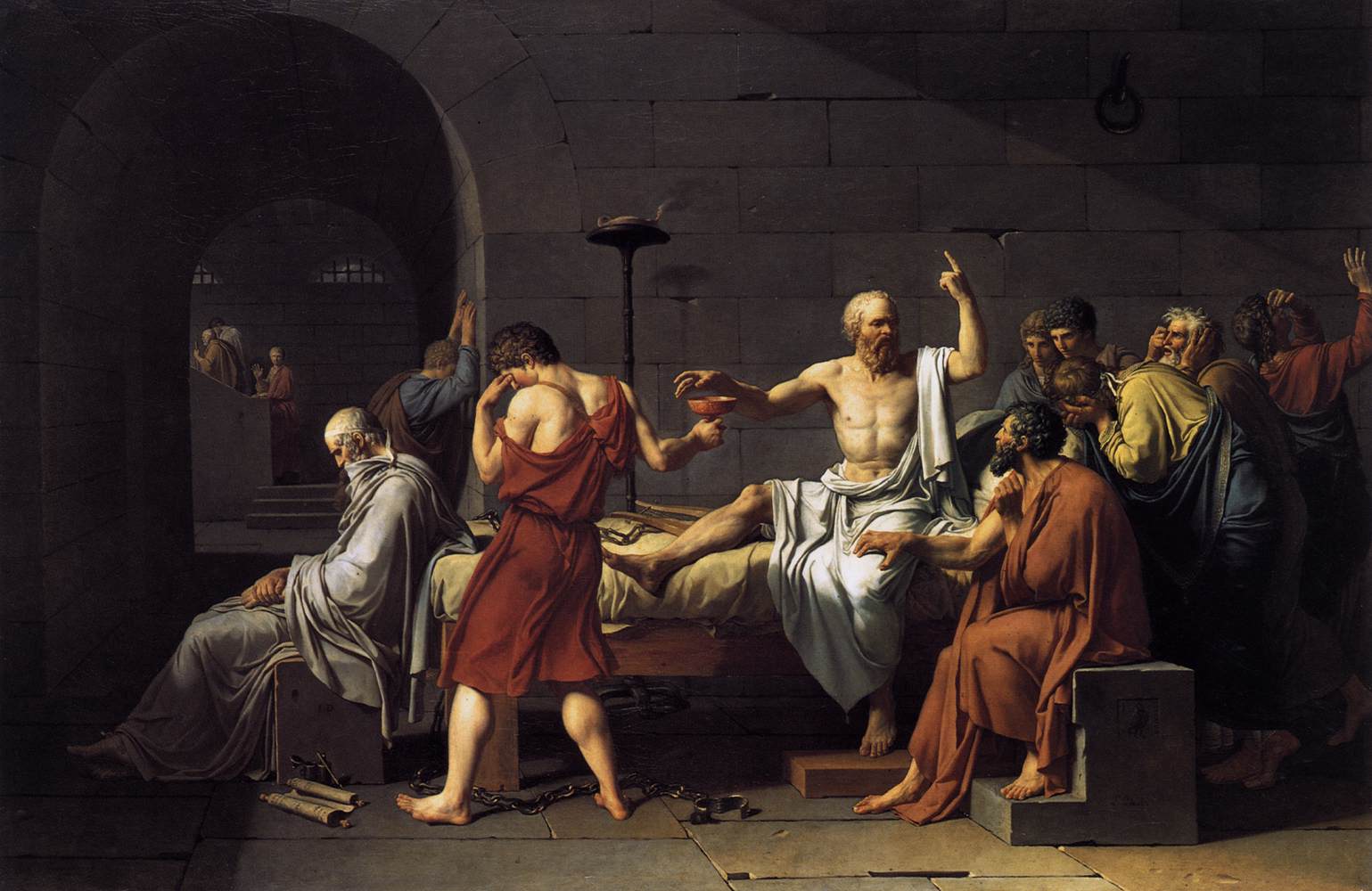
the death of socrates- 1787 oil painting by Jacques-Louis David and Socrates died from corrupting the youth of athens, dissing the Gods, and death by hemlock
http://en.wikipedia.org/wiki/The_Death_of_Socrates


the socratic method- socrates created and it is a form of inquiry and discussion between individuals, based on asking and answering questions to stimulate critical thinking and to illuminate ideas
http://en.wikipedia.org/wiki/Socratic_method

what ancient greeks meant if they called you an idiot- "person lacking professional skill" or a private citizen/individual
http://en.wikipedia.org/wiki/Idiot


Wednesday, September 3, 2014

Day Five

     Today in class, we talked about the story we read in class called "A message to Garcia". The story was in the newspaper, and so many people wanted their own copy, so they made booklets of it. They sold 80 million copies of the story, for people to learn and read. We learned about the author, Elbert Hubbard. Elbert died on a ship called RMS Lusitania, in 1915. After we talked about the story, we talked about the age to vote and politics.We talked about how mostly the people that vote are older, because they really care about our country, even if they are dying soon.  Back then, you couldn't vote until you were 21, but they have now changed it to 18. You could risk your life to go in the army, but couldn't vote.

Tuesday, September 2, 2014

Day Four

     Today in class, we talked about how to set up our blogs. A lot of people in our class were making new blogs, instead of adding to the ordinal blog. I was confused at first, but then understood what we had to do to add to our blog. The title for our blogs were wrong, so we also changed that. We learned how to check power school, to see our grade in the class. If you don't complete a blog, he will take points off. On the human geo blog, we watched a video of the ALS ice bucket challenge. ALS is a very serious disease and we have raised over 90 million dollars. Doing the ice bucket challenge and donating money can make a big difference. We were challenged to do the challenge for a good cause.

Second Day

Today in human geography class, we made sure everyone had or knew we had to have a copybook for the class. The copybook is good to have to write down notes and to better understand what you are writing. Mr. Schick went over what to do when we are absent, so we are prepared. When we have athletic games or have to leave early we have to tell him before, so he will know you have to leave. When we need to see or need help from Mr. Schick, you have to meet him at his office when you both are free. Mr. Schick teaches in three different classrooms, so it might get confusing. He gave us our daily homework, which is to write our blog. After that he dismissed us and we went to our other classes. Can't wait what we do in human geography in the future!

Monday, September 1, 2014

Day Three

This year I will do several things to help me have a successful year at John Carroll. One of those things will be to be organized. Being organized will help because then I wont get anything mixed up for this class. It will ensure me that I will never have a paper missing. Another way will be to be kind to everyone so that I don't have any drama my freshman year. It will also help me because it will help me make new friends. My third way of being successful this year is going to be a good student, by always doing my homework. This will help me get a good grade in your class. Another thing is going to be always use my off mods wisely. I will work on things that need to be completed. Another way is that I will show up on time with time to spare in class so that I have time to get situated for my class.

Tuesday, August 26, 2014

     My first day at John Carroll was great! All of my teachers were very nice and I felt very welcomed in the community. I saw a lot of my friends I knew through the halls and was very happy I got to see them. Some of my friends are in my classes, which is even better! I think this year will be a good year with a lot of great people.

     In the beginning of the day we went to advisory and I met new people in different grades than me. After advisory, all of the freshman girls gathered in the upper gym to take yearbook and swipe card pictures. We went to the lower gym to talk about the rules and expectations at John Carroll and met some new teachers. After, we went to the cafeteria to talk about participation and different events happening. I think it is amazing that they do trips to different countries and I will defiantly be interested in that!


     John Carroll is so much different then my middle school, Saint Margaret. At Saint Margaret, we didn't have our own laptops and we had a cart that went around the school. I think the laptops help a lot to have them for every class. At Saint Margaret we didn't have a cafeteria, so that is a big difference too! Also, we didn't have locks on our lockers in middle school, so a lot of people struggled with that. Luckily, I learned how to open it and didn't have to be late for class!

     I can't wait to be spending my next four years at such an amazing school. There will be a lot of high school memories and I can't wait!